 Creator of JenneTastic®
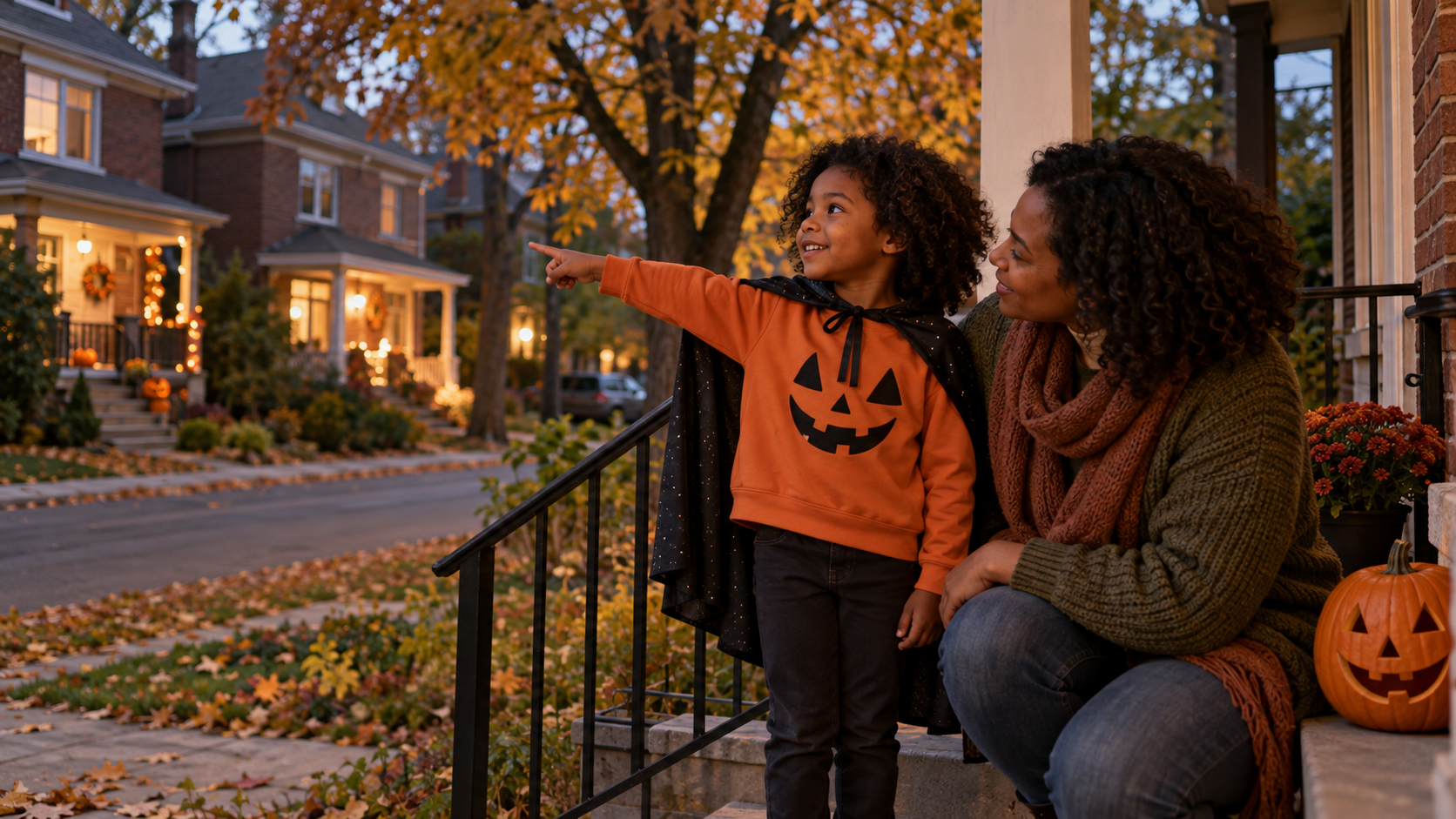
Your child has been talking about their costume for weeks. They know which character they want to be and have already chosen their candy bag. Then Halloween arrives. The costume’s neckline feels uncomfortable under a coat, a neighbour’s decoration suddenly starts shrieking, and your child asks to go home after two houses.
Their excitement was real. So is their discomfort.
Halloween brings together experiences that are usually spread across different settings: unfamiliar clothing, crowded sidewalks, unexpected sounds, changing light, conversations with strangers, and a disrupted evening routine. The National Autistic Society identifies sensory sensitivities and unexpected changes as possible challenges for autistic people during Halloween.
Preparing for these situations starts with your particular child: what they enjoy, what they find difficult, and how they communicate when something needs to change. A useful plan gives everyone a starting point while leaving room to shorten the outing, remove part of a costume, or celebrate at home.
Find Out Which Parts of Halloween Matter to Your Child
Before planning the route, ask what your child wants to experience. “What would you like to do for Halloween?” may be enough for some children. Others may find specific choices easier: “Would you like to see the pumpkins or visit Grandma in your costume?”
Their answer may surprise you. The most exciting part might be carrying a flashlight, seeing a friend, or handing out candy. Knowing that helps you decide where to put your time and energy.
Use your child’s usual communication methods. Photographs, gestures, picture symbols, or a communication device can all help them express a preference. Leave time for an answer rather than presenting several new questions at once.
Also explain which activities are optional. Wearing a mask, posing for photographs, and visiting every house do not need to be part of the evening. If your child wants to wear their costume only at home, you can plan around that.
Last year offers useful information, but check again this year. Interests and preferences can change.
Test the Costume With the Coat, Shoes, and Candy Bag
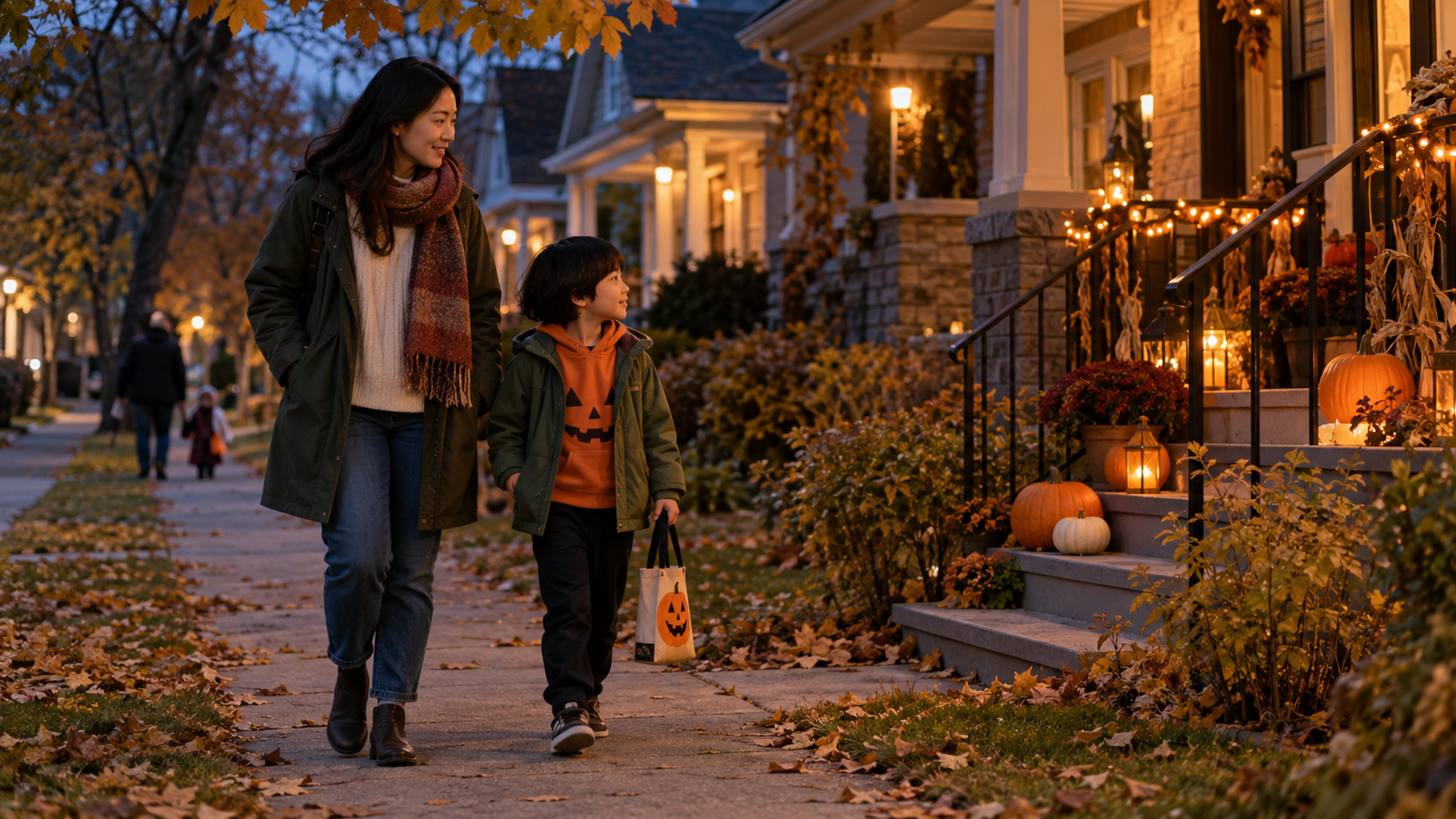
Try the complete outfit before October 31, including the outdoor clothing your child will need. The American Autism Association recommends trying costumes in advance so families can identify changes that improve comfort.
In Québec, the coat can change how a costume feels. A cape might bunch around the neck. Wings may press against the back. A hat that feels fine indoors may become uncomfortable over a tuque or under a hood.
Invite your child to walk, sit, raise their arms, and carry the candy bag. Ask concrete questions: “Does anything rub?” “Can you turn your head?” “Would you like to take that piece off?”
Watch what they show you, too. Repeatedly pulling at a collar or removing a headpiece gives you something specific to adjust.
Familiar clothes can provide the starting point for a costume: a skeleton shirt, pumpkin pyjamas, or comfortable clothing in a favourite character’s colours. Accessories can stay optional.
Keep a change of clothes accessible. If your child removes the costume halfway through the outing, they should still be able to continue comfortably if they want to.
Show What Will Happen, Including How the Evening Can End
“Going trick-or-treating” includes several steps that adults may take for granted. Explain the sequence in a way your child understands: get dressed, walk together, approach a house, wait, receive candy, and decide whether to continue.
A short visual plan may be useful. Autism NI suggests visual schedules and maps to show Halloween activities and planned stops.
You could use photographs of two familiar houses, followed by a picture of home. Keep the plan simple enough to check while outside. A detailed schedule becomes difficult to use if you need to explain it repeatedly on a busy sidewalk.
If your child wants to practise, try knocking on an inside door and receiving a small item. Let them choose whether to speak, gesture, show a card, or have you speak for them. There is no need to rehearse a performance.
Explain possible surprises honestly: “Some decorations move or make noise. We can stay farther away or skip that house.”
Include the ending in your explanation: “You can tell me when you want to go home.”
Choose a Route With Several Easy Ways Back
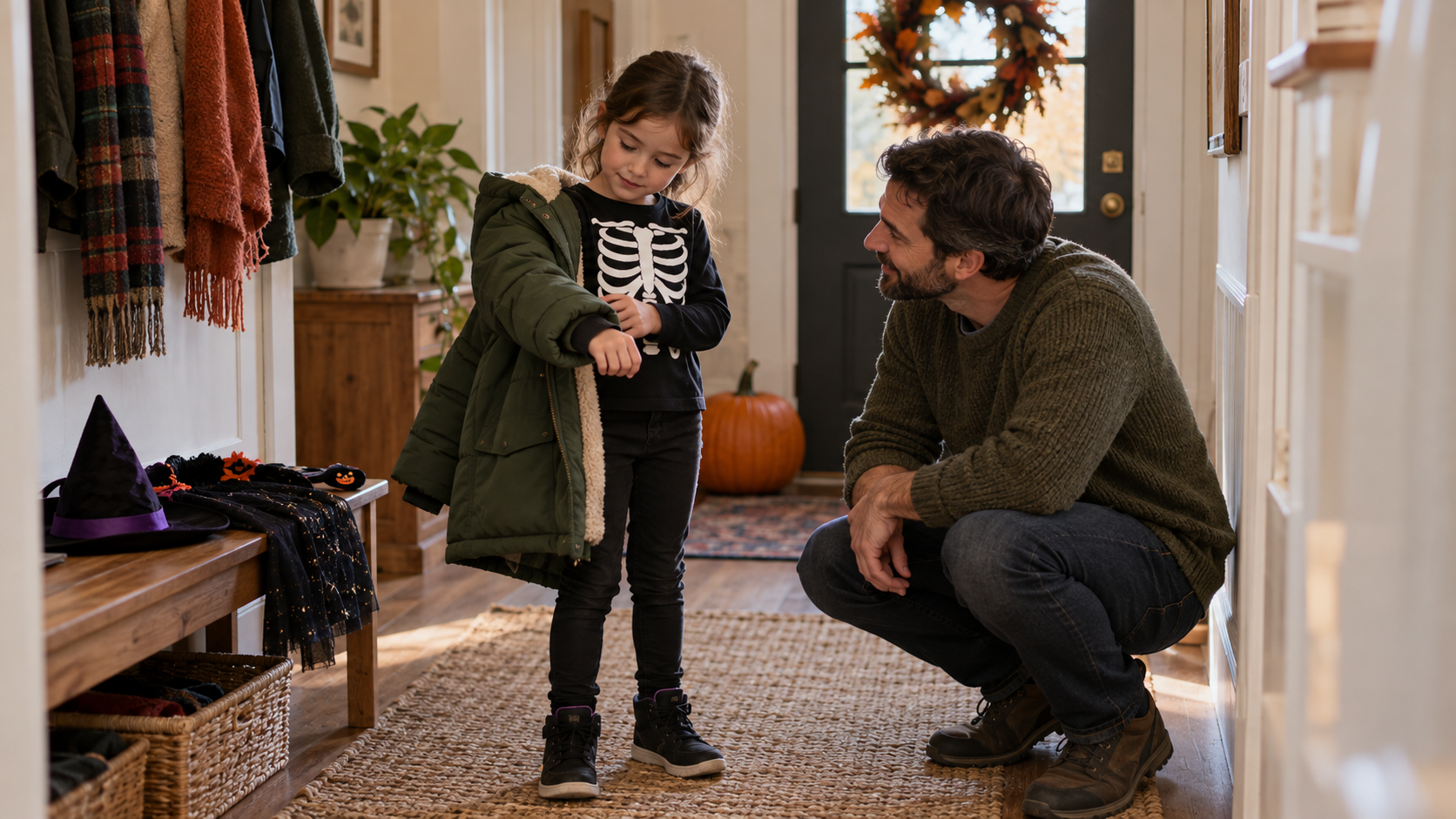
Look at the return journey before deciding how far to go. A route that keeps you close to home provides more flexibility than a long loop with no convenient shortcut.
You might choose a few familiar houses and stop at the corner to decide what comes next.
Make clear that these are possible stops. Your child can ask to return before visiting them all.
A daytime walk can help you notice steep steps, narrow entrances, uneven pavement, and large decorations. Some displays will be different after dark, so keep room to change direction.
If several children are coming, agree on the arrangements between adults beforehand. Who returns home if one child wants to stop? Who continues with the others? If only one adult is available, plan a route the whole group can leave together.
Consider the pace of any friends joining you. A large group moving quickly from door to door may leave little opportunity to pause. A smaller outing with people who understand the plan may be easier to adjust.
Agree on a Clear Signal for “Break” and “Home”
Your child may find it difficult to explain their discomfort while standing beside a noisy display. Choose a simple way to communicate before leaving: a word, gesture, picture card, or familiar button on a communication device.
Where possible, distinguish between taking a break and ending the outing. “Break” could mean moving to a quieter spot together. “Home” means you return.
Describe your response clearly: “When you show me this picture, we’ll move away.” Avoid adding conditions once your child uses the signal. “Just three more houses” changes the agreement at the moment they need it.
Pack belongings so you can reach them quickly. Water, a spare shirt, and a familiar object are easier to find in a separate pouch than under a pile of candy.
Consider practical communication with neighbours, too. If your child would rather not speak at the door, you can simply say, “Happy Halloween!” on their behalf. They do not need to explain personal information to receive a welcome.
Check In Before the Next House
Between stops, offer brief choices: “Another house or a break?” Ask somewhere your child can hear you, and allow time for their answer.
Pay attention to their usual ways of showing discomfort. They may pull at clothing, cover their ears, stop walking, or move away from an entrance. Avoid assuming that one behaviour tells you everything about how they feel. Use what you know about your child and the ways they communicate.
If they already use and like ear defenders, bring them along. Try any unfamiliar equipment beforehand rather than expecting your child to accept it for the first time outside.
When continuing becomes difficult, move to a safe place away from traffic and passing visitors. Keep your words simple: “We’re stopping here. I’m with you.” Decisions about another house can wait.
For a fuller discussion of everyday sound sensitivities, our guide to autism, sound sensitivity, and sensory overload provides related information beyond Halloween.
Keep a Familiar Pause Space Available at Home
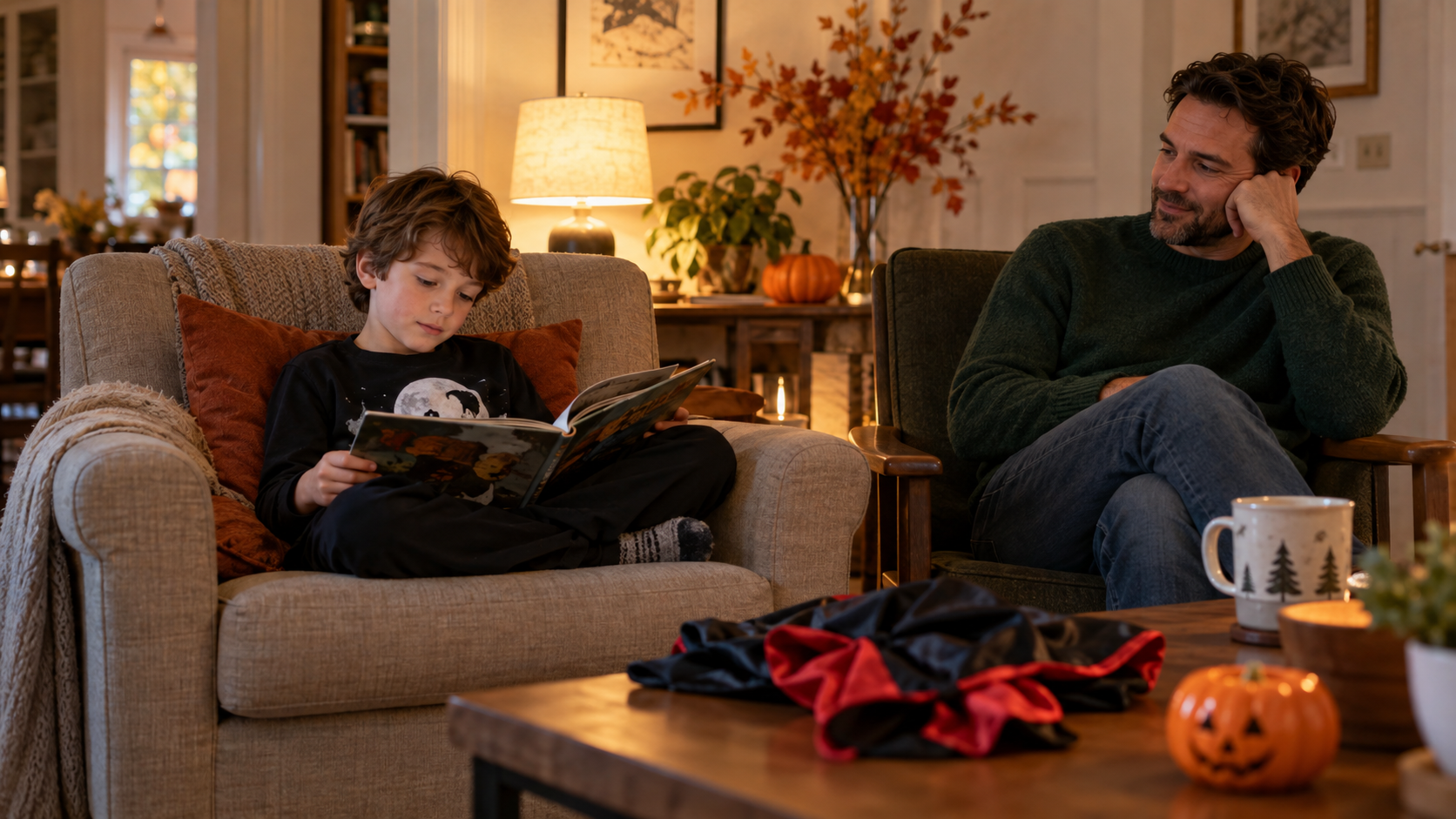
Prepare somewhere your child can use before leaving or after returning. Ask what they would like there. A favourite book, familiar blanket, or comfortable place to sit may be enough.
Choose the location carefully. A corner beside the front door may remain busy all evening.
Somewhere farther from the doorbell and conversations may be more useful.
If guests are visiting, explain that the space needs to stay available. Ask them to let your child settle without following them with questions or requests for photographs.
A portable tent such as JenneTastic can be included if your child enjoys having a defined place for a pause. Introduce it before Halloween, follow the product’s instructions, and provide adult supervision. Let your child decide whether to use it and leave freely.
Its usefulness will depend on the child and the surrounding environment. Consider the sound and activity around the space as well as the space itself.
Our article on creating a calm corner at home explores choosing a suitable location in more detail. For Halloween, the immediate goal is to keep a familiar option accessible when the house becomes busier.
Coordinate With School or Daycare
The evening may follow a full day of costume parades, music, visitors, and changes to the usual schedule. Ask the school or daycare what is planned before deciding how much to include after pickup.
Specific questions help: Will there be a large gathering? Can children change out of their costumes? Is participation in the parade optional? Who can accompany your child if they want to leave an activity?
Share information staff can use: “She enjoys watching the costumes but prefers to stand away from the speakers,” or “He wants to wear his usual shirt under the costume and take the hat off whenever he needs to.”
For more about making a pause space available during the daycare day, read JenneTastic in Daycare: A Quiet Moment During a Busy Day of Play.
After pickup, check the evening’s plan again. Your child may have enjoyed the celebration and still prefer a quiet night. Leave enough time to make that decision before everyone is dressed and waiting at the door.
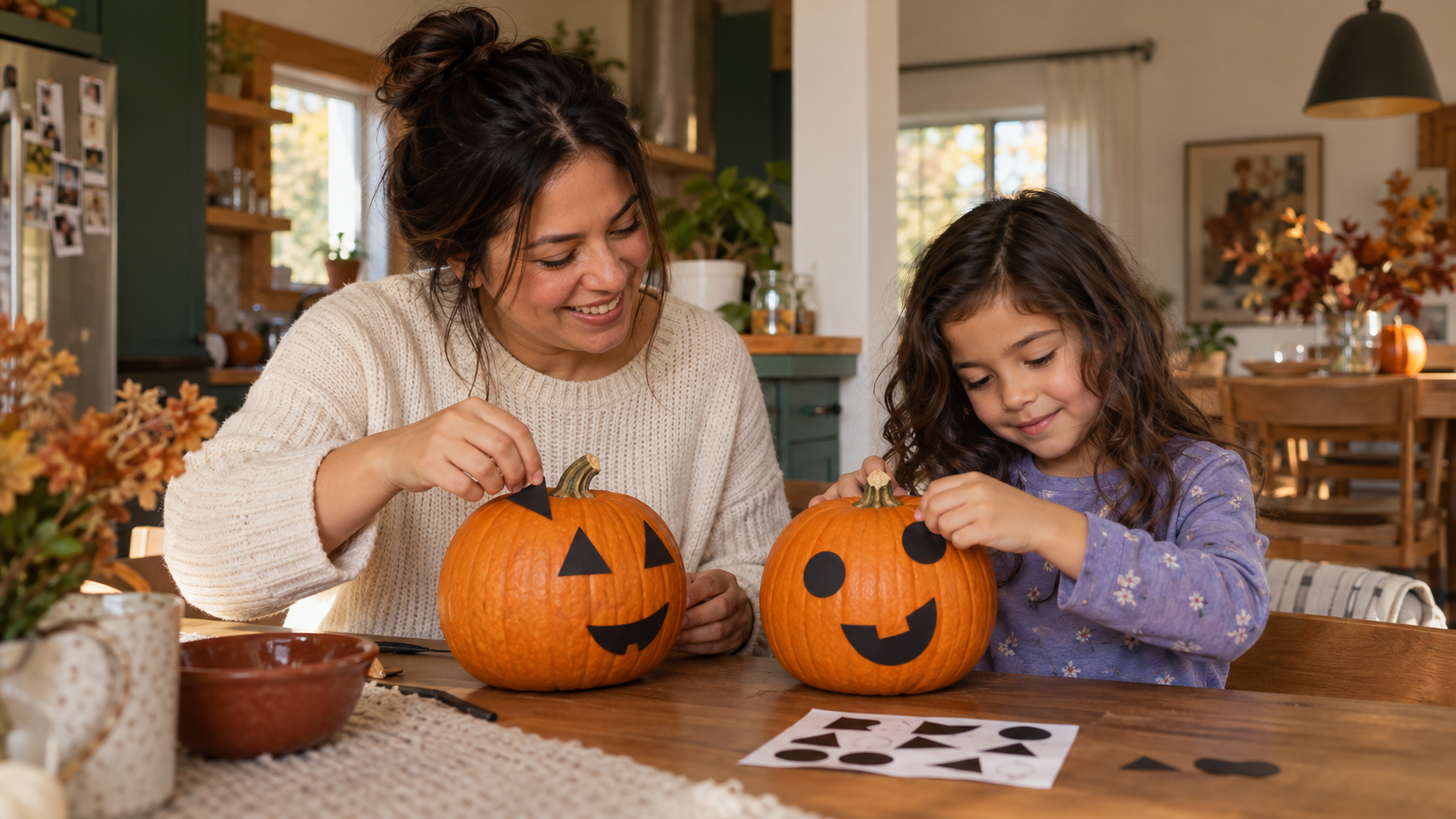
Make Staying Home a Specific, Appealing Option
Explain what an at-home Halloween could involve. “We’ll do something else” gives your child little information. “We can decorate a pumpkin with stickers and have a treasure hunt in the living room” offers a clearer picture.
Choose materials your child enjoys using. If they dislike the wet inside of a pumpkin, leave the carving to someone else or use an uncarved pumpkin for decorating.
A small trick-or-treat route between rooms can work for a child who enjoys knocking and receiving surprises but prefers a familiar setting. You can also arrange one visit from someone they know at an agreed time.
If the doorbell is unwelcome, put a note outside asking visitors not to ring or knock. Your child might still enjoy looking at costumes from a window with you.
Keep the number of activities manageable. One chosen game and a familiar story can be the entire evening. If siblings go out, make sure the child staying home knows which adult will remain with them and what they will do together.
Leave the Review Until Your Child Is Ready
When you return, take care of immediate needs before asking for a detailed account. Your child may want to change clothes, get a drink, or sit somewhere familiar.
Later, perhaps the next day, ask about one specific experience: “How did the costume feel with your coat?” or “Would you like to visit that house again?”
Accept that they may not want to discuss it. You can still note practical observations for next year: the candy bag became heavy, one route was easier to leave, or the hat stayed home.
Avoid comparing the length of siblings’ outings. “You told me you wanted to come home, and we did” acknowledges communication you want your child to be able to use again.

Your Halloween Preparation Checklist
Before October 31, check these points together:
Interest: Which part of Halloween does your child want to experience?
Clothing: Has the costume been tried with outdoor clothing?
Route: Can you return easily from several points?
Communication: How can your child request a break or ask to go home?
Supplies: Are familiar belongings and spare clothes within reach?
Adults: Who accompanies each child if plans change?
Home: Is a familiar pause space available?
Alternative: Does your child know what staying home could look like?
On the evening itself, use the plan as something you can adjust together. Your child may want fewer stops than expected, or they may ask to continue. Keep checking what works for them.
A photograph of a pumpkin they decorated, a visit with a favourite neighbour, or two enjoyable houses can give you a useful starting point for next year. Write down what they liked while it is still fresh.