 Creator of JenneTastic®
Reviewed October 6, 2026.
A corner can look quiet from across the room and feel quite different when you sit there. The television is directly ahead. People pass close by on their way to the kitchen. Late-afternoon sunlight reaches the spot just when your child would use it.
Before adding anything, spend some time in the place you are considering.
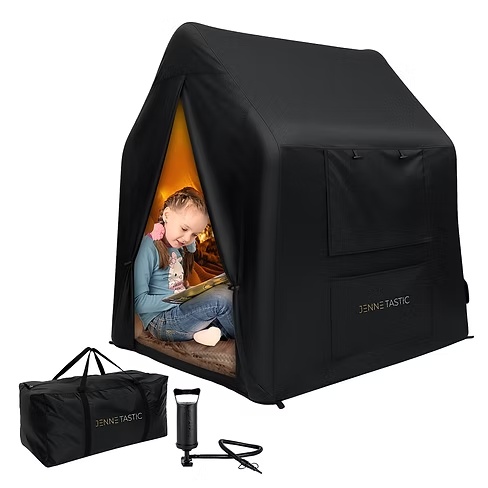
JenneTastic is a portable, inflatable sensory tent that provides a defined indoor space for a voluntary, supervised pause. Planning its location means considering the whole arrangement: the tent, its opening, the supervising adult and the room around them.
This guide focuses on choosing that location, assessing sound and light, and keeping the space simple.
In this article
Measure the Space People Will Use
Check the Light at the Right Time
Look Beyond the Tent’s Interior
A Family Compares Two Locations
Choose Contents Before Buying Accessories
Start With Two Possible Spots
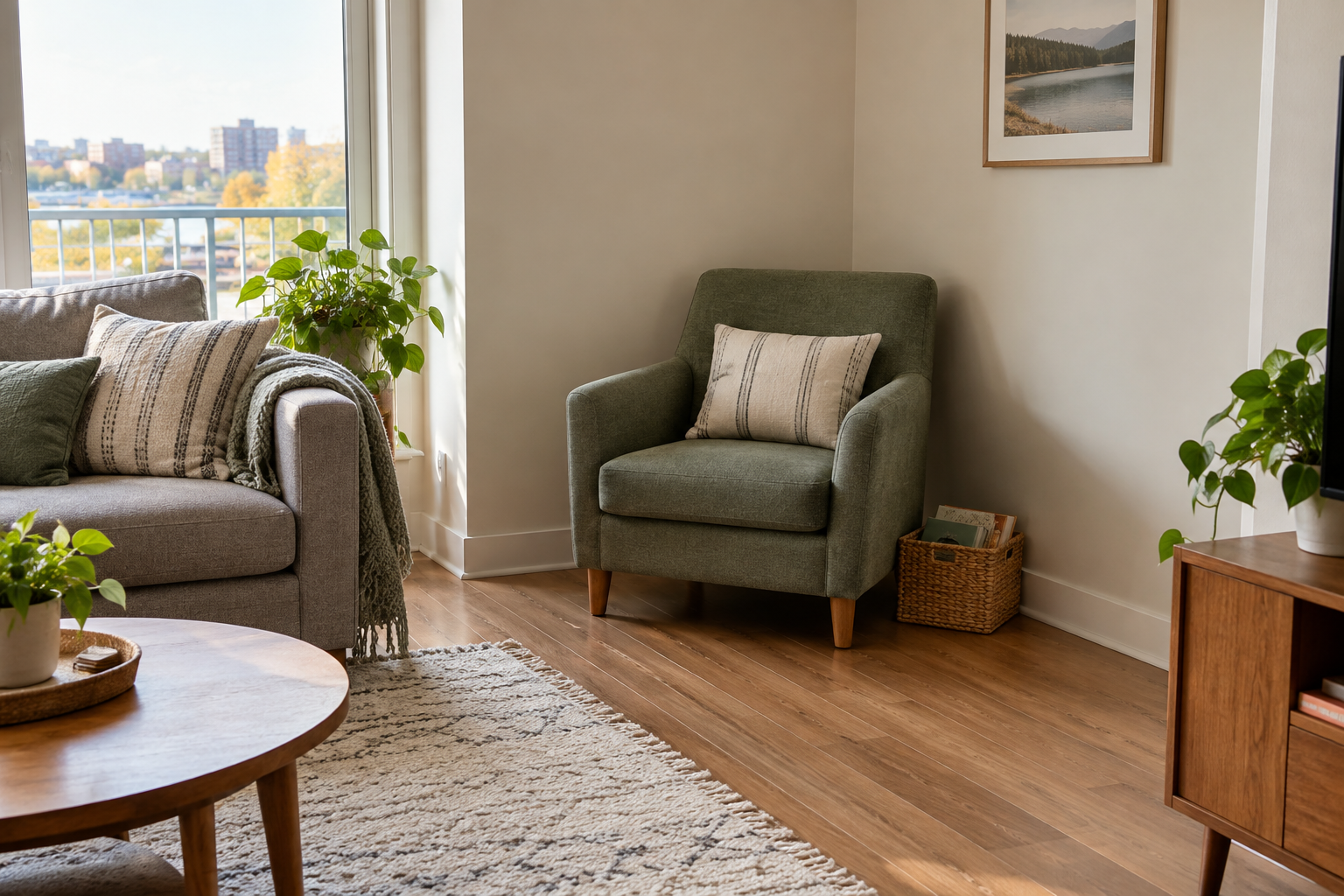
If your home allows it, compare two locations rather than committing to the first unused corner.
Look for places that could meet the product’s placement instructions. An empty patch of floor is only a starting point; nearby furniture, heat sources, household routes and supervision may rule it out.
Visit each spot when you would expect to use it. A living room before breakfast can feel different from the same room after school. Listen to the sounds, notice who passes through and look at what is directly ahead.
Ask your child about the differences where possible. “Which of these places would you prefer?” gives them a concrete comparison. “What would your perfect calm corner look like?” may be harder to answer.
Keep your questions tied to what they can experience. They might dislike seeing the television, prefer being able to see the doorway or want the adult’s seat closer.
Use those preferences to compare appropriate locations. If neither works, reconsider the room before buying accessories to improve an unsuitable spot.
Measure the Space People Will Use
Check JenneTastic’s current dimensions and placement requirements before planning around it.
Measure the available floor area, then account for the opening and the adult’s position. The tent’s footprint alone does not show how the arrangement will fit into the room.
You can temporarily mark the proposed footprint while the tent is not in use. Then walk through the room normally. Open nearby doors and cupboards. Pull out the dining chair that someone uses each day.
Does a door swing into the proposed area? Would opening a drawer require someone to move? Would a person carrying a laundry basket have to squeeze past?
These checks reveal space that looks available but is already doing a job.
Choose where the supervising adult will be at the same time. Try that position and check whether furniture obstructs supervision or makes it difficult to respond. The adult must be able to provide constant supervision according to the product instructions.
Keep the entrance and exit unobstructed. The adult’s chair and belongings must not become obstacles.
If the arrangement depends on everyone carefully stepping around it, look for a better location. Do not reduce the required space or improvise a tighter setup to make the tent fit.
Compare What You Hear
Stand at each candidate spot without changing anything first. You may notice a sound you had stopped paying attention to: a television, kitchen appliance, speaker or conversation from an adjoining area.
Write down the main source, not a general label such as “too noisy.” That helps you decide whether anything can be changed.
If the television is on but nobody is watching, turning it off may make more difference than moving a basket or adding soft furnishings. If conversation is the main sound, a position farther from the dining table may be worth considering.
Choose adjustments that your household can maintain. A location that works only when everyone else remains silent is unlikely to suit a shared home.
Do not assume the tent makes surrounding noise disappear. JenneTastic should not be described as soundproof, and its enclosure is not a substitute for assessing the room.
Avoid adding music automatically. That introduces another sound into a place where your child may want fewer sounds. Begin with the room as it is and ask about their experience.
Check the Light at the Right Time
Light changes throughout the day. Check the proposed spot during the hours when it would be used, especially if it is near a window.
Notice direct sunlight, reflections from screens and nearby lamps. A light that looks comfortable from the doorway may be glaring from another position.
Use the room’s ordinary controls where appropriate. Closing a blind or changing which existing light is on may be enough to compare the options. There is no need to start with a shopping list of coloured lights.
Ask your child about specific choices:
“Is this lamp bothering you?”
“Would you like the blind open or closed?”
Offer choices you can safely provide. Dimmer is not automatically better; some children may prefer seeing the surrounding room clearly.
Follow the product’s placement guidance around heat sources. Do not attach lights or introduce electrical accessories without confirming that the setup is appropriate.
If a lighting idea requires a cord across an access route, choose another approach. Keep the arrangement easy to supervise as well as comfortable to look at.
Look Beyond the Tent’s Interior
What is outside the space can matter as much as what goes inside.
From the proposed location, look towards the room. A television screen, overflowing shelf or busy doorway may remain directly in view.
You do not need to strip the room of family life. Decide which visible details can reasonably be adjusted. A few loose items may belong back in their usual storage. A different orientation may offer another view, provided the placement and supervision remain appropriate.
Consider movement as well as objects. A route used repeatedly between the kitchen and hallway may make one side of the room less suitable than another.
Avoid hiding the tent behind furniture to remove those views. A location must still allow proper supervision and access.
Your child may also want to see part of the household activity. Ask rather than assuming that the most secluded-looking corner will be their preference.
A Family Compares Two Locations
Here is an imagined example.
A family has two possible places for JenneTastic in the living room. The first is an unused corner beside the television cabinet. The second is along a wall near a small table.
They check the product information and measure both areas.
The first corner appears convenient until they test the household routes. People regularly pass the proposed opening to reach a cupboard. From the adult’s intended position, the television is also directly ahead.
The second location requires moving the small table to an appropriate spot elsewhere. That leaves room for the tent, access and the supervising adult without interfering with a door or cupboard.
They compare the two places in the afternoon. The second has fewer people passing nearby. The child says they prefer it because they can still see the room without looking directly at the screen.
Before choosing it, the parent checks that moving the table has not created a problem elsewhere. They then prepare JenneTastic according to the guide.
They have chosen a location based on what happens there. Decorative changes can wait until they know whether anything else is wanted.
Choose Contents Before Buying Accessories
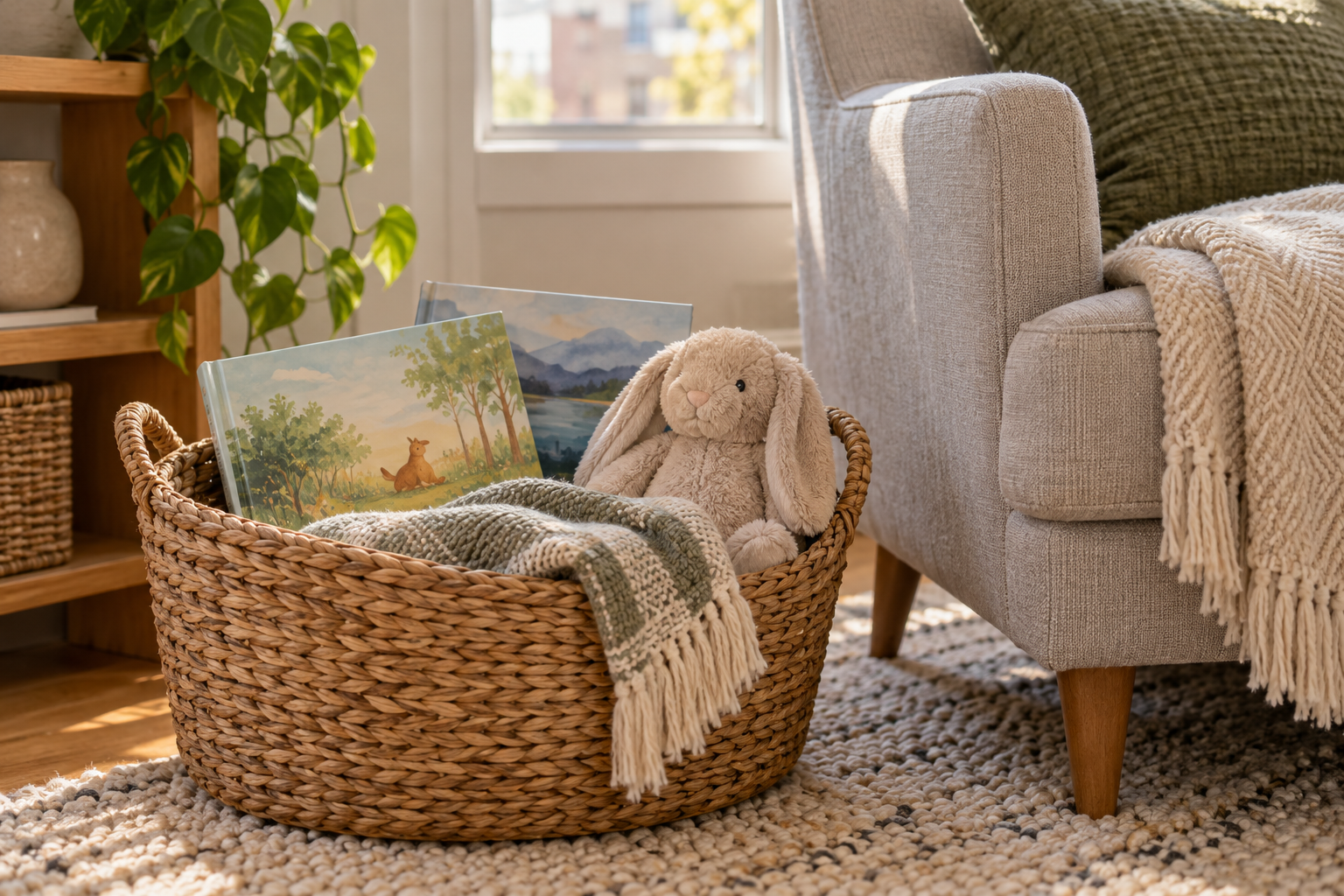
Once the location works, consider whether your child wants anything available for the pause.
Start with what they ask for and check that it is suitable under the product instructions. A familiar item may be preferable to several new ones. They may want nothing added.
Avoid assuming that an object is appropriate because it is soft, intended for children or labelled “sensory.” Assess it for this particular use.
You also do not need to buy a complete collection before offering the space. A basket of unfamiliar activities can add decisions and take up room without answering a request your child has made.
Keep materials not being used in their usual storage. Do not line the opening with baskets or place items where they obstruct access.
If a nearby shelf will hold something for the pause, consider how it is reached. Retrieving an item should not require moving the tent or leaning across its opening.
Choose practical additions slowly. An attractive photograph is not a reason to add something your child does not want.
Recheck When the Room Changes

A location may need another look after new furniture arrives, a lamp moves or the family rearranges the room.
Repeat the checks affected by that change. If a chair is added, examine access and the adult’s position. If the television moves, reconsider the view and sound. If use shifts to another time of day, check the light then.
Do not rely on the fact that the original arrangement worked. The current room is the one the child will use.
The location also needs to fit the household’s practical use of the kit. For timing, shared-room routines and packing away, see JenneTastic at Home: A Pause Space That Fits Family Life.
That article covers the daily organization. Here, the decision is whether the physical arrangement is suitable.
Before Offering the Space
Read the current FAQ and user guide and follow the complete placement, setup, inspection and care instructions.
JenneTastic is recommended for children aged three and older, with constant adult supervision. It is intended for temporary indoor use while awake, not sleep or active play. An adult operates the pump.
Never prevent a child from leaving or use the tent as punishment. The pause remains voluntary.
JenneTastic offers a defined place for a pause. It is not a treatment and does not guarantee that a particular setup will make a child feel calmer.
Plan the Location First
Before ordering, identify a location that can accommodate the product’s requirements, a supervising adult and the household’s normal access routes.
Compare the sound, light and view from that spot. Then include your child in deciding whether they want to use the space and what, if anything, they would like available.
View the JenneTastic kit and ordering options to check the product information before planning your calm corner.